
Using Generative AI to Support Colonoscopy Referral Triage
New Zealand’s endoscopy services operate under considerable demand pressure. Every colonoscopy referral must be reviewed to determine whether the procedure is indicated and, if so, how urgently the patient should be seen.
Free-text referral letters contain much of the information needed for triage, including symptoms, family history, laboratory results, previous investigations and relevant medicines, but often have missing or contradiction information. This presents a significant bottleneck for the NZ health system. A specialist must interpret this information and apply multiple clinical guidelines before assigning a priority.

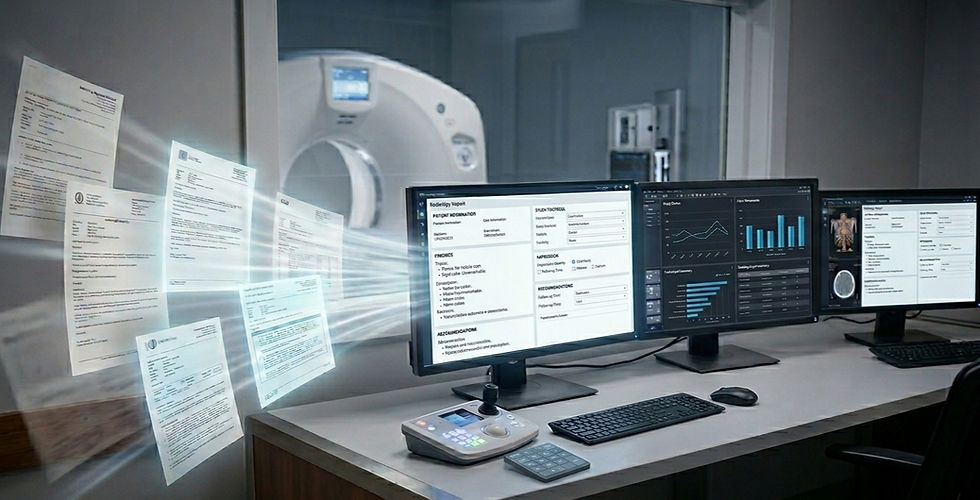
Figure 1. Conceptual illustration of the referral bottleneck. Free-text referrals concentrate substantial interpretive work at specialist review. AI-generated image (GPT-image-2.0)
Dr Jay Gong, a clinical pharmacist and pharmacoepidemiologist at the University of Auckland, and gastroenterologist Dr Henry Wei are co-principal leads on the project. Together with collaborators across Health New Zealand and the wider health sector, they developed GastroTriage, an AI-assisted clinical decision-support tool for colonoscopy referral triage.
GastroTriage provides clinicians with a reviewable first assessment that shows how the referral guidance was applied. The specialist remains responsible for the final decision.
Turning referral letters into structured assessments
GastroTriage uses a large language model to interpret the clinical information contained in a referral and apply relevant New Zealand colonoscopy guidelines.
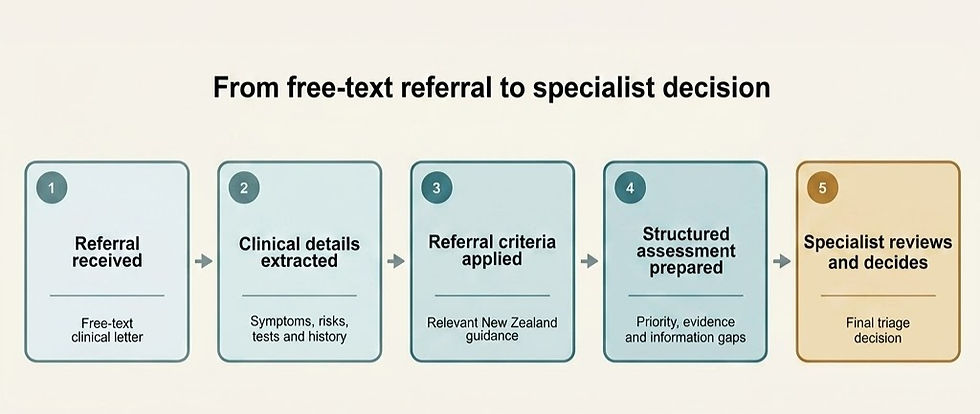
Figure 2. GastroTriage converts a free-text colonoscopy referral into a structured assessment for specialist review. The specialist remains responsible for the final triage decision. AI-generated image (GPT-image-2.0)
GastroTriage first extracts relevant details from the referral, including symptoms, risk factors, family history and previous investigations. It then evaluates this information against applicable Ministry of Health referral criteria. The tool returns a recommended priority category, supporting evidence and any information that is missing, contradicting, or needs clarification. The responsible clinician reviews this output.
Separating information extraction from guideline assessment allows clinicians and researchers to examine the recommendation alongside the clinical facts and reasoning used to reach it.
Learning from disagreement
An early exploratory evaluation of 100 referrals found that GastroTriage agreed with a blinded consultant’s prospective assessment in 70.1% of cases, with inter-clinician agreement at 58.0%. Repeated AI assessments showed 86.6% three-way reproducibility. This reflects an important challenge for clinical AI: the “correct” answer is not always as settled as the data used to evaluate the system might suggest.
Specialists may interpret the same referral differently, particularly when information is incomplete or several guidelines apply. The team is therefore developing a stronger reference standard based on consensus assessments from panels of New Zealand gastroenterologists for a much larger upcoming validation study.
Potential applications
GastroTriage could support several aspects of referral management:
• Providing clinicians with a consistent first-pass assessment of colonoscopy referrals
• Identifying missing investigations or clinical information before specialist review
• Making the application of referral guidelines more consistent, transparent and auditable
• Characterising demand and common reasons for inappropriate or incomplete referrals
• Reducing repetitive administrative work, clinician fatigue, while retaining clinical oversight
The team has designed the validation to include strong Māori and Pacific representation and assess performance in populations that experience recognised inequities in access to endoscopy services. We see high level of interoperability with other triage services, using a similar blueprint for design, validation and implementation.
From proof of concept to clinical implementation
The programme has received support from the Auckland Medical Research Foundation, the New Zealand Society of Gastroenterology and the MedTech Research and Acceleration Programme through Te Tītoki Mataora.
The next phase will focus on building the specialist-consensus reference standard, conducting a larger validation study (aiming for 600 referrals, with 50% Māori and Pacific patient referrals) and determining how the tool could fit safely within existing referral workflows. The underlying approach is also being explored in other health services, where clinicians face similar challenges interpreting and prioritising free-text referrals.
For Jay, Henry and the wider team, the central question is whether AI-assisted triage can improve a real health-system decision while meeting clinical standards for reliability, equity and transparency.
Research team
Dr Jay Gong, Dr Henry Wei, Dr Holly Wilson, Miss Makayla-Carrie Halafuka, Dr Parag Bhatnagar, Mr David Lee and collaborators across Waipapa Taumata Rau, University of Auckland and Health New Zealand.


Comments